
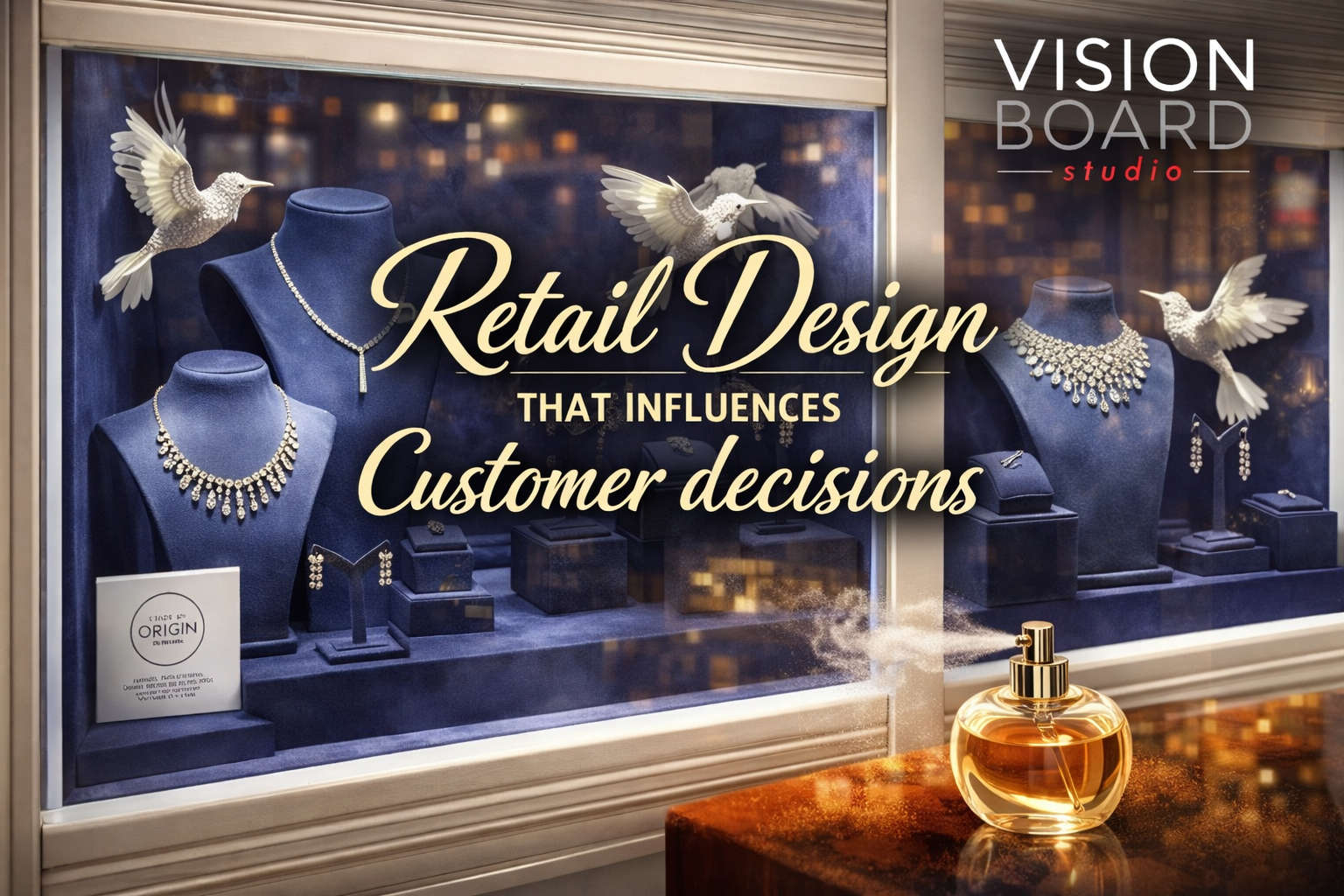
Exploring how space, light, and visual cues subconsciously shape the way people respond to environments
Design psychology plays a quiet but powerful role in how people experience spaces. Long before a person consciously evaluates a store, an interior, or a display, their mind has already begun responding. These responses happen instinctively, shaped by space, light, scale, and visual cues.
Understanding design psychology allows designers to move beyond appearance and into behaviour. It helps explain why some spaces feel welcoming, why others feel overwhelming, and why certain environments encourage people to stay longer, move freely, or engage more deeply.
This connection between design and response is not accidental. It is rooted in how humans perceive and interact with their surroundings.
Design psychology and the way we experience space
At its core, design psychology explores how environments influence thought, emotion, and behaviour. People rarely analyse why a space feels comfortable or unsettling, but their reactions are immediate.
Elements such as openness, proportion, and lighting shape perception before any conscious decision is made. This is why well-designed spaces feel intuitive. They align with how people naturally move, pause, and observe.
In retail environments, especially, these subconscious reactions play a significant role in mapping customer shopping behaviour. A space that feels clear and well-structured encourages exploration. A space that feels crowded or confusing often leads to disengagement.
The role of visual cues in design
Visual cues in design act as silent guides. They tell people where to look, where to move, and what to focus on without needing instruction.
Contrast draws attention. Repetition creates rhythm. Scale establishes importance. When used thoughtfully, visual cues reduce cognitive effort and make spaces easier to navigate.
In retail settings, visual cues influence how customers interpret displays and layouts. They can highlight priority areas, create natural pathways, or signal moments of pause. When visual cues are unclear or conflicting, the space feels tiring. When they are aligned, the experience feels seamless.
Environmental psychology in design and emotional response
Environmental psychology in design examines how the environment affects emotional states. Light, material, colour, and spatial proportions all contribute to mood and comfort.
Soft lighting can create a sense of ease and warmth. Harsh or uneven lighting can increase fatigue. Enclosed spaces can feel intimate or restrictive depending on scale and balance. Open spaces can feel liberating or overwhelming if not carefully composed.
Designers who understand environmental psychology in design are better equipped to create spaces that feel supportive rather than demanding. These environments encourage people to slow down, feel at ease, and engage more naturally.
Design and human behaviour in retail environments
The relationship between design and human behaviour becomes most visible in retail spaces. People do not behave randomly inside a store. Their movement and decisions are influenced by layout, visibility, and spatial flow.
Retail design layout plays a critical role here. Clear pathways allow customers to explore without friction. Visual anchors help orient movement. Balanced spacing prevents fatigue.
When retail design layout is planned with behaviour in mind, customers feel guided rather than controlled. This subtle distinction significantly impacts retail customer behaviour, influencing dwell time, engagement, and overall comfort.
Understanding customer shopping behaviour through space
Customer shopping behaviour is shaped by far more than product placement. The environment sets the tone for how people interact with what is being offered.
A space that feels chaotic can trigger hesitation. A space that feels considered builds trust. Customers are more likely to engage when they feel comfortable and oriented.
Design psychology helps explain these patterns. When spaces respect natural human responses, customers experience less mental effort. This ease often translates into longer visits and stronger brand recall.
Why clarity matters more than complexity
Richly detailed environments can be powerful when they are structured with care. Complexity itself is not the problem. Lack of clarity is.
Spaces that succeed are those where each element has a role. Visual richness is balanced with order. Layers are introduced gradually. This approach allows for a symbiotic relationship between design and human behaviour.
In retail, this balance ensures that abundance feels intentional rather than overwhelming. Customers can feel comfortable in the space without feeling rushed or overstimulated.
Design psychology as a long-term strategy
Design psychology is not about trends or surface-level appeal. It is a long-term approach to creating environments that remain effective.
Spaces designed with psychological understanding continue to work because they align with how people naturally respond. They do not rely solely on novelty. They rely on comfort, clarity, and connection.
This approach allows brands to build environments that feel relevant across changing seasons and consumer expectations.
Why design psychology matters more than ever
As environments compete for attention, understanding design psychology becomes increasingly important. People are exposed to constant visual input. Spaces that respect attention and emotional response stand out quietly.
When design is guided by human behaviour rather than decoration alone, it creates experiences that feel thoughtful and authentic. These are the spaces people return to and remember.
Design psychology at the heart of meaningful spaces
Design psychology brings intention to space. It connects the environment with emotion and behaviour. It transforms interiors from visual arrangements into live experiences.
When designers understand how space, light, and visual cues influence people subconsciously, they can create environments that feel intuitive, engaging, and human.
At its best, design psychology allows spaces to communicate without noise and guide without force. It reminds us that effective design is not just something to see. It is something to be holistically experienced.
Let’s transform your retail environment into a psychological experience. Contact us today for a customised consultation.