
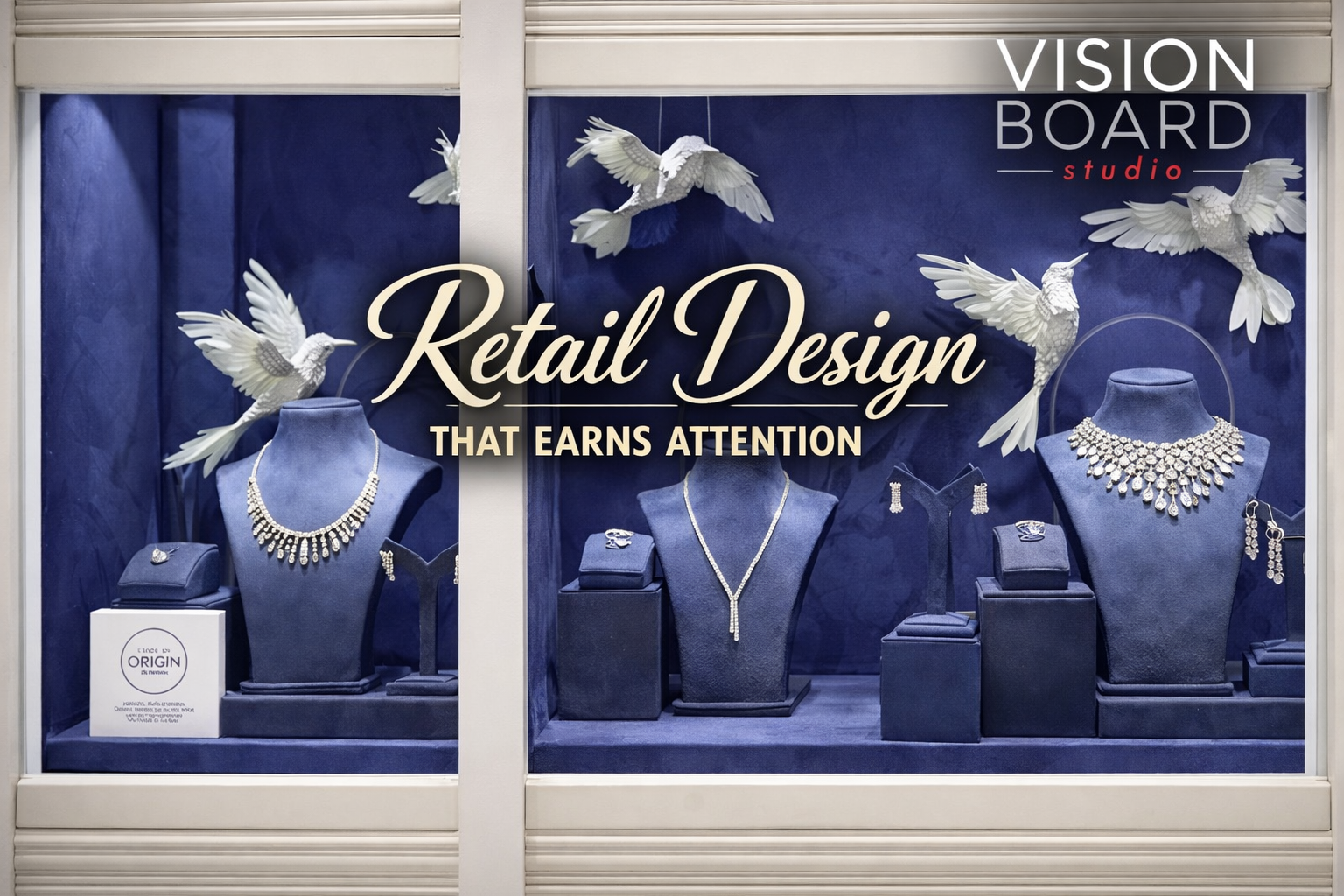
Transforming spaces from ordinary visual displays into meaningful experiences with intent
Retail design is often restricted to the first impression a space makes. Think about it. What drew you to walk into that store? It could be the burst of colours, the prominent use of props or simply the aesthetic appeal. However, there’s more to effective retail spaces than just colours, displays, and finishes. Effective retail environments are built on solid intent rather than mere appearance.
Intentional retail design shapes how people move, pause, and respond within a space. It creates fluid experiences that feel natural rather than staged. This distinction, though subtle, separates memorable spaces from those that are merely glanced at.
Understanding retail design
Good retail design is essentially experiential at its core. It considers customer interaction from the moment they enter the store to what first draws their attention, how they navigate the space, and what impression remains with them.
These responses are rarely conscious. People instinctively react to layout, scale, lighting, and visual balance. Effective retail design works quietly in the background, guiding behaviour without demanding attention.
Ergo, defining retail design solely by aesthetics is not possible, as it involves space functionality and product display.
A strong retail design experience does not rely on excess. It builds on structure.
From display to design
There is a clear starting point, followed by layers that reveal themselves as customers navigate the retail space. This approach makes the environment more communicative, rather than overwhelming visitors at once.
In planning retail interiors, customer behaviours play a pivotal role. People do not follow fixed paths or read every display. They respond to the light, contrast, and visual cues. When these elements align, the space feels intuitive. When they compete, the experience feels confusing.
Why intent matters more than visual abundance
There is often a temptation in retail to fill every available surface: more displays, more graphics, more messaging. While richly detailed spaces can be powerful, they only work when there is a clear hierarchy.
Intent-driven retail design ideas focus on clarity. Each element serves a purpose. Lighting directs attention. Space creates comfort. Displays communicate without crowding the narrative.
It does not mean retail design needs to be minimal. Layered environments can be highly effective when every detail contributes to a single story. The difference lies in whether abundance is controlled or scattered.
The emotional layer of retail design
The human experience is rich in emotions, and that’s what drives retail design. Customers may enter a store looking for a product, but their experience is shaped by how the space makes them feel.
Retail design interior choices influence mood and perception long before any interaction takes place. Light can calm or energise. Scale can create openness or intimacy. Material and texture add depth and character. These elements shape comfort, trust, and engagement.
When a retail design company understands this emotional layer, the space becomes more than a selling environment. It becomes a place where people invest time and effort to create repeat value.
Retail design ideas that start with people
Effective retail design ideas don’t follow trends. Instead, they put people first.
Strong design decisions are based on how customers move, observe, and interact. Asking the right questions early allows the space to support behaviour rather than compete with it.
This approach also ensures that a brand’s identity is expressed clearly. Instead of forcing a visual language onto a space, the design allows the brand story to emerge naturally.
Choosing the right retail design company
A thoughtful retail design company does more than execute layouts. It translates brand intent into spatial experience.
The most successful retail spaces are built through collaboration. Designers, brands, and teams working together with a shared understanding of purpose. When this alignment exists, the space feels cohesive and meaningful.
Effective retail design is rooted in understanding and navigating human behaviour and experience.
When retail design truly works
Retail design works when it feels effortless, with gentle guidance that makes richness feel composed rather than chaotic. When every detail supports a larger idea, intent transforms retail design from visual display into experience. It allows spaces to communicate without noise.
At its best, retail design does not ask for attention. It earns it. Transform your space from a display to an experience. Contact us to collaborate on your next retail experience.